Solar Panel Dust Accumulation: What Two Rare Haboobs Taught Phoenix Homeowners
Living in Phoenix means you learn to live with dust. It settles on cars, patios, window screens, and of course, solar panels. But after two rare Category 5 haboobs rolled through the Valley in quick succession, homeowners here saw something they had never dealt with before: a layer of fine, corrosive dust so thick that it cut solar production nearly in half. That experience changed how many of us think about exterior maintenance, and it made the topic of solar panel dust accumulation suddenly feel urgent.
The Haboob That Changed the Rules
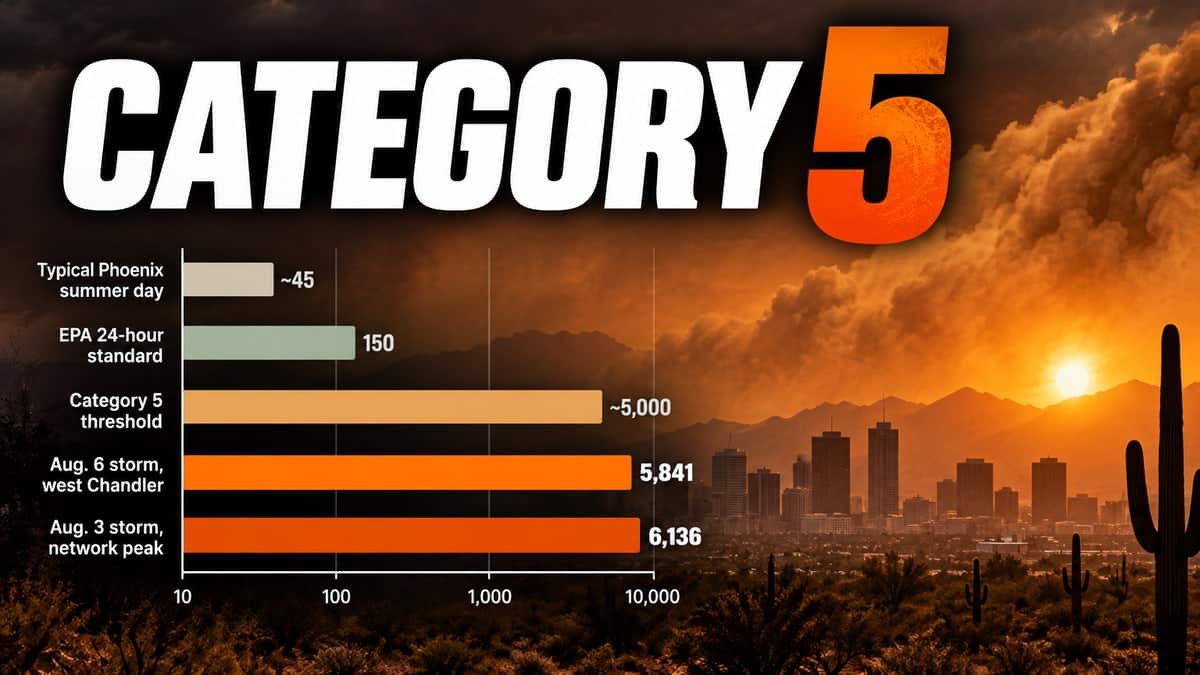
Haboobs are not new to Arizona. These massive dust storms roll in during monsoon season, turning the sky brown and reducing visibility to near zero. But a Category 5 haboob is different. Wind speeds exceed 50 miles per hour, and the dust plume can rise thousands of feet into the air. When two of them hit Phoenix within the same month, the aftermath was unlike anything most homeowners had seen. The dust that settled was not the usual light grit you blow off with a leaf blower. It was a fine, cement-like powder that bonded to glass, metal, and plastic surfaces. On solar panels, it formed a crust that simple rain could not wash away.
This is where the real lesson on solar panel dust accumulation begins. Most people assume that a good rain will clean their panels. And for normal conditions, that is mostly true. But after those storms, the dust had a different chemistry. It contained higher levels of clay and silt, and it carried microscopic particles that clung to the surface of PV modules with surprising tenacity. Homeowners who checked their monitoring systems saw a sharp drop in solar efficiency, sometimes as much as 30 to 40 percent within a matter of days.
Why Dust Accumulation Is Worse in the Desert
Phoenix sits in the Sonoran Desert, a place where the air is dry and the sun is relentless. Under normal conditions, dust accumulates gradually. A thin layer builds up over weeks, and a typical thunderstorm can rinse most of it off. But after a major dust storm, the rate of accumulation accelerates. The particles are smaller, the wind carries them higher, and they land with more force, embedding themselves into the microscopic pores of the glass. Over time, this reduces the amount of light that reaches the solar cells, which directly impacts the energy your system produces.
For a solar farm, this can mean thousands of dollars in lost revenue. For a residential system, it means your inverter has to work harder to convert a weaker current, and your monitoring system will show a steady decline in output. The frustrating part is that the decline can be so gradual that you do not notice it until you compare your monthly production numbers to the same month last year. By then, the dust has been sitting there for weeks, silently stealing your savings.
Surface Cleaning After a Major Storm
After the second haboob, many Phoenix homeowners faced a choice. They could wait for rain, which might not come for weeks, or they could clean the panels themselves. But cleaning solar panels is not as simple as hosing them down. The dust from a Category 5 storm is abrasive. If you wipe it dry, you risk scratching the glass. If you use too much water pressure, you can force grit into the seals around the panels. And if you use the wrong cleaning solution, you can leave a residue that attracts even more dust.
The best approach for that kind of heavy dust is a two-step process. First, you use a dry brushing technique to remove the loose layer. A soft-bristle brush or a microfiber cloth on an extendable pole works well. You want to lift the dust off without grinding it into the surface. Then you follow with a gentle water rinse, using a low-pressure nozzle. Some homeowners in my neighborhood tried waterless cleaning products designed for solar panels. These sprays break the bond between the dust and the glass, allowing you to wipe it away with minimal scratching. They work, but they cost more than plain water, and you have to apply them regularly.
One thing I learned from talking to a local installer is that timing matters. If you clean your panels in the middle of the day when they are hot, the water can evaporate too fast and leave mineral streaks. Early morning or late afternoon is better. Also, never use a pressure washer. The high-pressure spray can damage the seals and force water into the junction box, which can cause long-term electrical issues.
Anti-Static Coatings and Preventive Maintenance
After the haboobs, some homeowners started looking into anti-static coatings. These are thin, transparent layers that you apply to the surface of the PV modules. They reduce the static charge that attracts dust, and they make it easier for rain to wash the panels clean. In a place like Phoenix, where dust storms are seasonal but predictable, an anti-static coating can cut the frequency of manual cleaning in half. It is not a magic bullet. If a Category 5 storm dumps a quarter-inch of fine powder on your roof, you still have to clean it. But for the day-to-day accumulation between storms, the coating helps.
I have also seen people experiment with waterless cleaning systems that use a combination of brushes and compressed air. These are popular on large solar farms where water is scarce. For a residential roof, they are overkill, but the principle is sound. The less water you use, the less chance you have of introducing moisture into the electrical components. That said, for most homeowners, a simple schedule of surface cleaning every four to six weeks during monsoon season is enough to keep solar efficiency above 95 percent.
The Role of Your Monitoring System
Your monitoring system is your best friend when it comes to managing solar panel dust accumulation. Most modern systems show real-time production data and compare it to expected output based on weather and time of year. After the haboobs, I watched my own system drop from a typical 6.2 kilowatt-hours on a sunny day to 3.8 kilowatt-hours. That was a 39 percent loss. A quick cleaning brought it back to 5.9 kilowatt-hours the next day. Without the monitoring system, I might not have noticed the decline for weeks.
For anyone with solar panels in Arizona, I recommend checking your production numbers at least once a week during dust season. If you see a sudden drop that does not match the weather, dust is the likely culprit. Do not assume it is your inverter or your panels. A simple visual inspection will usually confirm the problem. If the glass looks hazy or has a visible layer of grit, it is time to clean.
Exterior Maintenance Beyond the Panels
The haboobs also highlighted the importance of exterior maintenance for the rest of the home. The same corrosive dust that coats your solar panels can damage your air conditioning condenser coils, clog your gutter downspouts, and pit the clear coat on your car. I had to replace the filter on my HVAC system twice that month. The dust got into everything. For solar panel owners, it is worth remembering that the inverter and the monitoring system are also exposed to the elements. Make sure the vents on your inverter are clear of debris, and check that the monitoring system's sensor is not caked with dust. A dirty sensor can give false readings and make you think your panels are underperforming when the real problem is just a dirty lens.
Practical Lessons from Phoenix
Living through two rare Category 5 haboobs in one season taught me a few things about solar panel dust accumulation that I did not learn from the manuals. First, do not wait for rain. In the desert, rain can be weeks away, and by then the dust has already cost you money. Second, use the gentlest cleaning method that gets the job done. Dry brushing followed by a low-pressure rinse is usually enough. Third, invest in a good monitoring system and check it regularly. The numbers will tell you when something is wrong. And finally, consider an anti-static coating if you live in a region prone to dust storms. It is not expensive, and it can save you a lot of time on cleaning.
Solar panels are a long-term investment. They sit on your roof for 25 years or more, exposed to everything the desert can throw at them. Dust is not going away. But with a little attention and a sensible maintenance schedule, you can keep your system producing at its best, even after the worst haboobs Phoenix has to offer.